Submission volume is up in 2026.
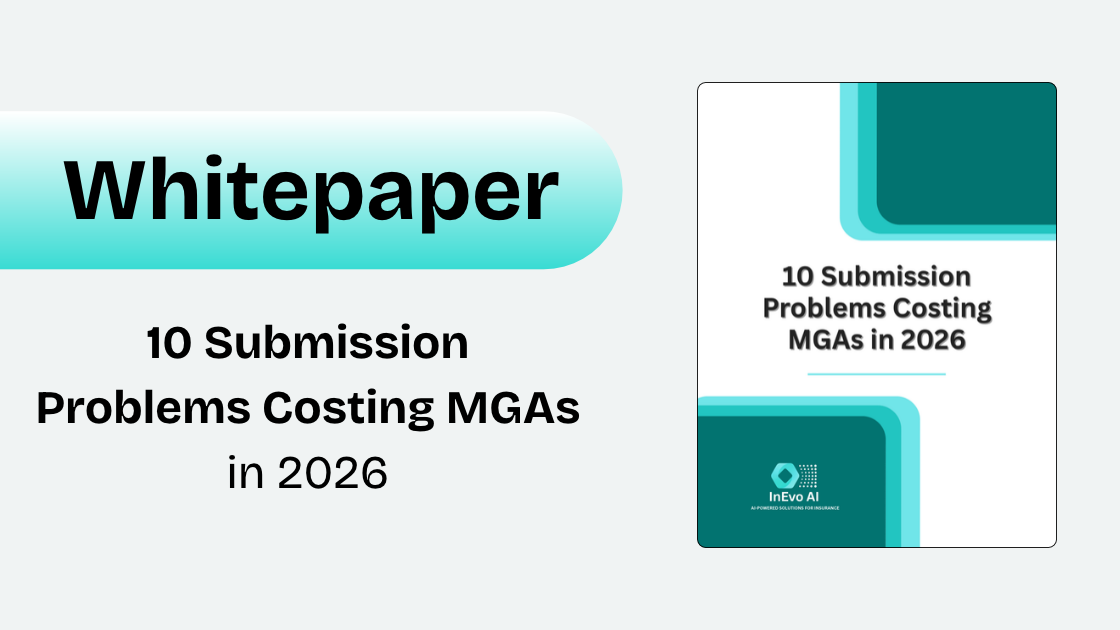
Brokers expect answers faster, while carriers are asking tougher questions about how risks are selected and evaluated. Much of that pressure reaches intake and quoting first, and our new whitepaper examines what those challenges are actually costing MGAs.
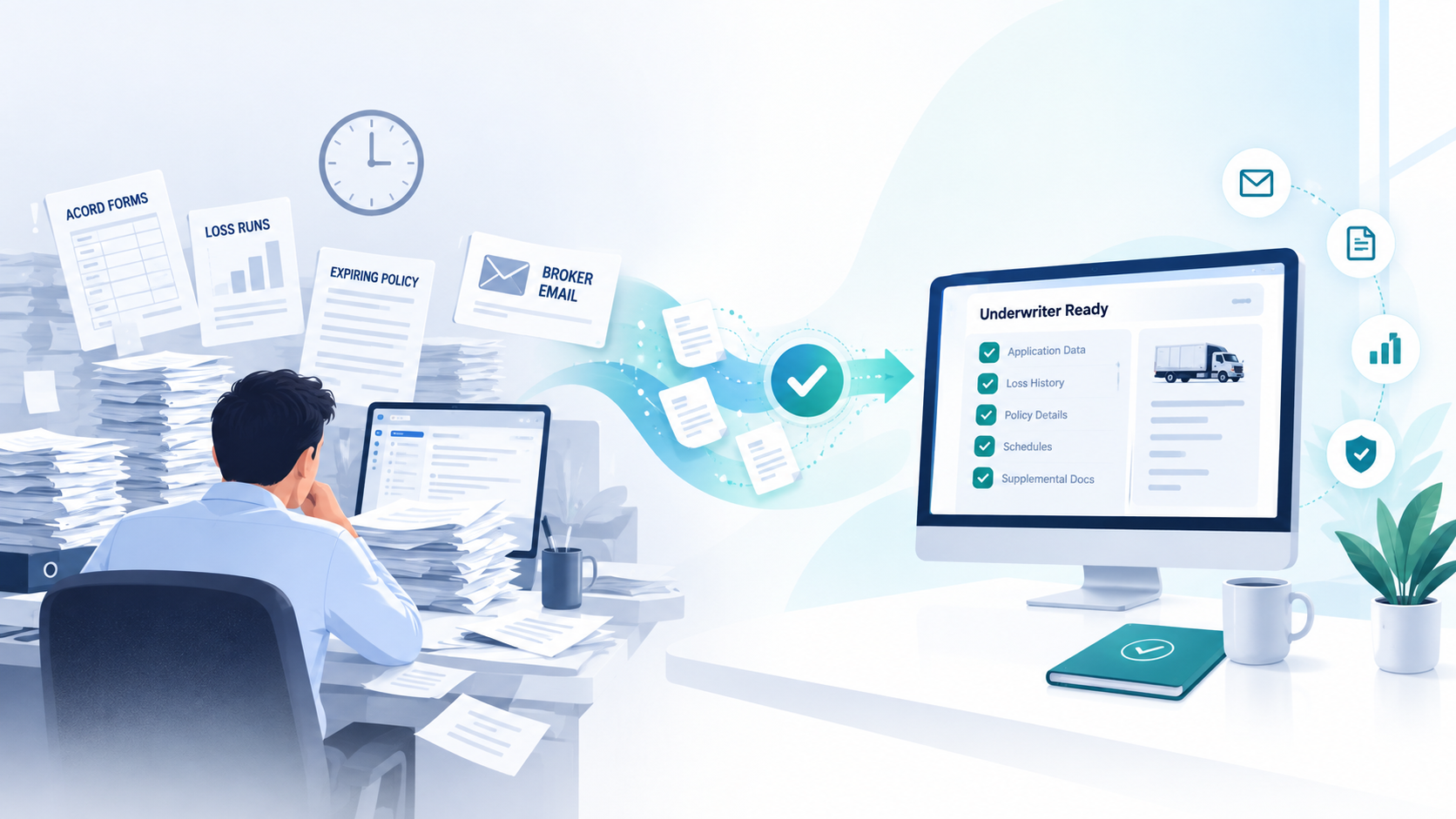
Submissions arrive in whatever format the broker chooses. One email might include an ACORD form, an SOV, a loss run, a prior policy, and several scanned documents. The next broker may send the same type of account in a completely different format.
That inconsistency creates problems before underwriting even begins.
Missing ACORD fields can stop a quote from moving forward, while an SOV that has not been properly cleaned can cause property and package quotes to vary by 20% or more.
The whitepaper identifies six of these submission-quality issues and maps each one to its operational impact on the MGA.
Slow Quotes Can Cost Business
Submission quality is only part of the problem. Speed matters too.
A quote that takes two to five days to return may reach the broker after the account has already been bound elsewhere.
But quoting faster is not enough.
Knowing whether a submission is worth quoting in the first place is just as important. Effective triage helps underwriting teams focus their time on opportunities that fit their appetite and have a realistic chance of converting.
The whitepaper breaks down the five key triage decisions behind that process.
The Hidden Cost of Rework
Rework is more difficult to measure because a submission can appear to have been processed successfully.
The cost often shows up later.
A broker comes back with a question. Pricing needs to change. The file requires a carrier referral. A quote has to be corrected and reissued.
Individually, these may look like small adjustments. Repeated across a large submission volume, they create a significant operational burden.
Carrier partners notice the pattern as well.
Vertafore’s 2026 MGA outlook highlights underwriting consistency, loss-ratio stability, and portfolio discipline among the expectations capacity providers are placing on MGAs.
When One Submission Is Spread Across Seven Systems
The whitepaper also examines the impact of system sprawl.
In many MGA workflows, a single submission can move across as many as seven different tools before the quoting process is complete.
Each handoff creates another opportunity for duplicate entry, missing information, inconsistent data, or unnecessary delay.
The problem becomes even more significant in specialty lines, where usable loss history is available on only 31% of submissions, compared with 73% in traditional lines.
That difference changes how much verification and underwriting work needs to happen before a risk can be evaluated confidently.
Why Hiring Alone Does Not Clear the Backlog
Adding headcount may increase capacity, but it does not necessarily solve the underlying intake problem.
When the process remains manual and fragmented, every new person inherits the same repetitive work, inconsistent submission formats, system switching, and verification requirements.
As submission volume continues to grow, the additional capacity can eventually be consumed by the same process that created the original backlog.
The whitepaper explains why fixing the intake layer can have a greater long-term impact than simply adding more people to an inefficient workflow.
Which Submission Problem Should MGAs Fix First?
There are ten problems covered in the whitepaper, but no MGA can realistically solve all ten at once.
That is why we ranked them.
The number-one issue is the problem that many of the other nine ultimately flow from.
You can find the complete ranking on page 11 of the whitepaper, followed on the next page by the intake layer designed to address it.
Download the whitepaper to see all ten submission problems, understand their operational impact, and evaluate where your own intake process stands today.