
A mid-sized commercial account renews property, general liability, and workers’ compensation at the same time.
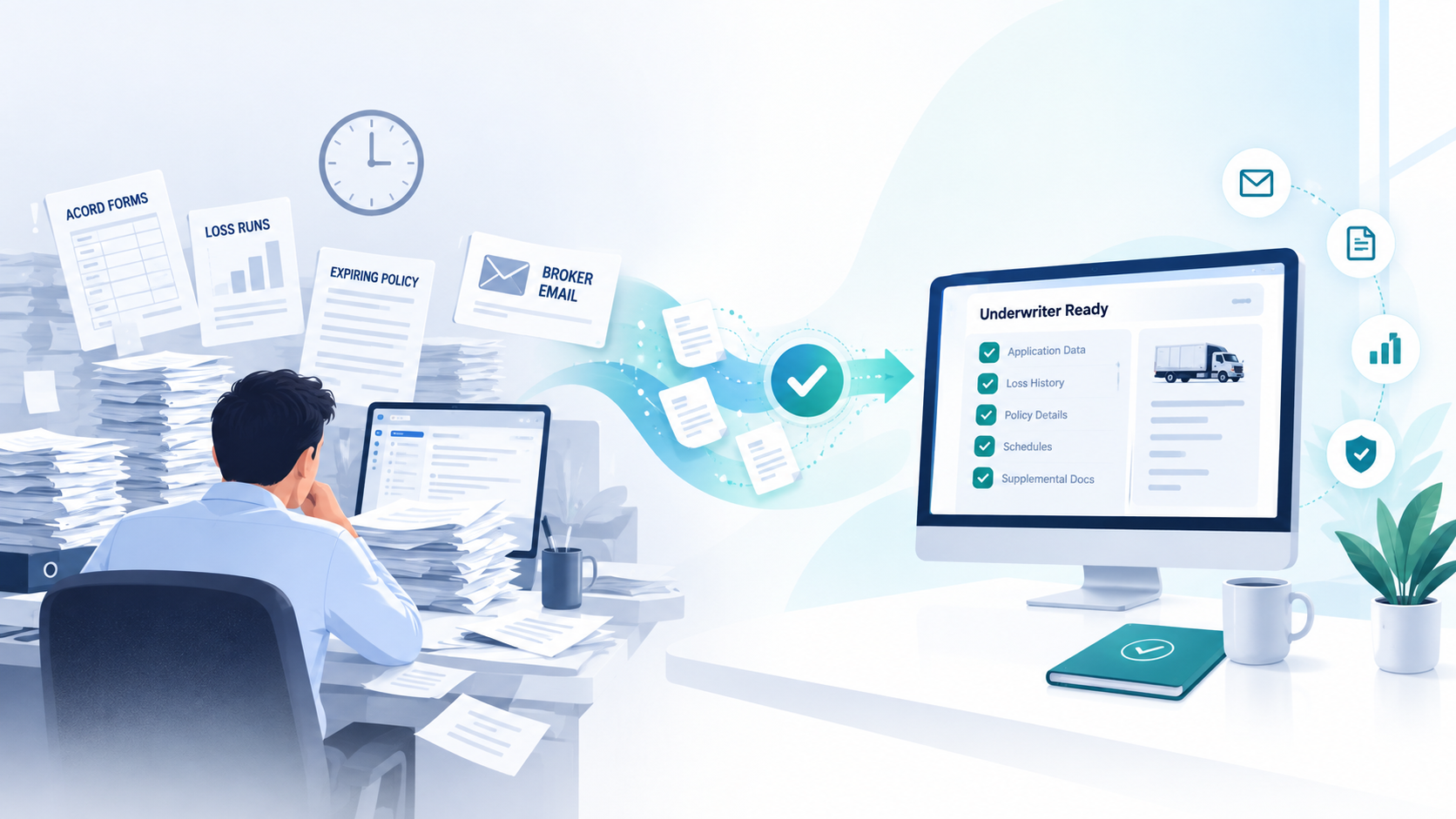
Before a broker can have a single conversation with the client, someone on the team is already working through declaration pages, ACORD forms, endorsement schedules, and quote requests across multiple carriers each using their own format.
The work is not complicated but repetitive, sequential, and it fills the hours before any real placement work begins. What follows covers five specific areas where AI is reducing that operational load, what each change looks like in practice, and what brokers should verify before adopting any of these tools.
Why P&C Operations Are Harder to Scale Than Most People Realize
Commercial P&C is not a single workflow. It is several workflows running at the same time each tied to a different line of business, a different set of carrier requirements, and a different renewal timeline.
Managing Multiple Lines Means Managing Multiple Workflows at Once
A broker managing a handful of such accounts is running several workflows simultaneously, each with different deadlines, different underwriters, and different servicing contacts. Each line has its own forms, its own carrier contacts, and its own renewal date. These do not always align.
The Real Challenge Is Organizing Information
The most amount of the time and work in P&C operations goes into keeping things organized.
- Quote requests and carrier correspondence buried across email threads
- Old submission documents prepared for carriers the account no longer works with
- ACORD forms filled out for one line but missing data for another
- Loss runs from multiple carriers in formats that cannot be directly compared
- Coverage notes and underwriting decisions stored informally or not at all
Before a broker can review anything or prepare anything, that information needs to be found, verified, and put into a usable format. That process happens before the advisory work begins and it happens every time a new piece of business comes in or a renewal cycle starts.
That is the category of work where AI has the most direct near-term application. It is also the category where using the wrong tools creates real compliance and data handling risk, which the final section of this article addresses.
Document Review Is Where That Disorganization Shows Up First
For renewals, the comparison work is line-specific. A property policy may have a new co-insurance clause. A GL renewal may carry a modified products liability exclusion. A workers’ comp policy may have an updated experience modifier that affects pricing. AI flags each of these changes by line rather than forcing the broker to open last year’s declarations alongside this year’s across every carrier document in the set.
For ports of policy, the problem is format incompatibility. A commercial property schedule from one carrier will not map cleanly onto the incoming carrier’s statement of values template. A GL policy from Carrier A may define “occurrence” differently than Carrier B’s form. AI compares the underlying coverage terms across those format differences and surfaces gaps the broker needs to resolve before the port is finalized. That comparison done manually is where E&O exposure concentrates.
For new business, the challenge is incomplete intake. A contractor applying for GL and workers’ comp may submit payroll figures for one line but not the other. An ACORD 125 may arrive without a completed operations description. AI flags those gaps before the submission is built rather than after the carrier asks for them.
Across all three scenarios, the broker moves from organizing documents to reviewing findings. The time saving is 30 to 60 minutes per account before any client conversation begins. Whether a flagged change is material depends on that client’s specific risk profile and operations. That call stays with the broker.
For most teams, renewal document review is the lowest-risk starting point. The before-and-after comparison is easy to measure and any missed flag shows up quickly. A practical self-check: how long did your last multi-line renewal comparison take before you opened the first client conversation?
Submission Triage and Inbox Management
A commercial P&C inbox does not receive one type of submission. On any given morning it might have a new BOP request from a small contractor, a workers’ comp renewal for a staffing firm, a commercial fleet quote for a logistics company, and a GL application for a manufacturer.
Each arriving as a different combination of emails, attached ACORD forms, loss runs, and supplemental applications.
Each one needs to go to a different person, requires different supporting documents, and sits under a different underwriting appetite.
Before any of that routing happens, someone has to read each submission, figure out what line or lines are involved, identify what is present and what is missing, and match it to the right producer or account manager. On a book with 20 or 30 active accounts across multiple P&C lines, that intake work alone can consume an hour or more each morning before the first quote is touched.
How AI Handles Submission Triage Automatically
AI reads incoming emails and attachments, identifies the line of business, detects whether the submission is a renewal, a port, or new business, and routes it to the right person without manual review. A GL renewal for a habitational account goes to a different queue than a new commercial auto submission for a trucking fleet. The system makes that distinction automatically rather than relying on whoever opens the inbox first.
Some Quote Management Agent operate through email and a Chrome plugin. Brokers work inside tools they already use rather than logging into a separate platform. High-priority quotes are surfaced first. The inbox is processed in a consistent, systematic way regardless of how busy the team is or what time the submission arrives.
ACORD Form Processing
ACORD form processing is one of the most routine tasks in commercial P&C operations and one of the most consequential when it goes wrong. Every commercial account requires ACORD forms. Some of them being:
- A general liability submission uses the ACORD 125 Commercial Insurance Application and the ACORD 126 General Liability Section
- A commercial property account requires the ACORD 140 Property Section
- Workers’ compensation runs on the ACORD 130
- Commercial auto uses the ACORD 137
Inland marine and BOPs have their own supplemental forms on top of the core application
On a mid-sized account renewing across three or four lines simultaneously, that is four or five separate forms, each pulling from the same underlying account data, each filled out manually.
The information needed to fill them almost always exists somewhere already. The problem is that it gets re-entered manually every time, and errors introduced at this stage travel downstream into the submission, the quote, and sometimes the bound policy.
What AI-Powered Document Parsing Actually Does
AI extracts structured data directly from incoming PDFs, emails, and filled quote forms without the broker manually re-entering anything. InEvo AI handles both commercial and personal LOB ACORD forms parsing, with 95% accuracy in data extraction and 80% fewer submission errors as a result.
Accuracy at the extraction stage prevents errors from compounding across every subsequent stage. Error handling is built into the process. The system flags incomplete or inconsistent fields before the submission moves forward rather than after it reaches the carrier. The broker’s role at this stage shifts from entering data to verifying what the system extracted. Verification is faster and produces fewer errors than manual entry.
Across 20 to 30 renewals, ports, and new business accounts per quarter, the time saving adds up.
Port-of-policy re-entry is typically where error rates are highest and where an accuracy improvement has the most downstream impact. Fewer carrier follow-ups mean fewer interruptions mid-cycle and a meaningfully lower risk of errors and omissions exposure.
Quote Prioritization and Underwriting Coordination
Once submissions are parsed and organized, the next friction point is internal coordination. Which quotes need attention first? Which submissions are complete enough to move forward? Which accounts need underwriter review and which can move quickly? Without a system to answer these questions, work moves in the order it arrived rather than the order it should be addressed.
How AI Risk Scoring Changes the Coordination Dynamic
AI pre-scores each submission based on risk profile, eligibility, and complexity before it reaches the underwriter. Some Risk Analysis Agents use a machine learning model for dynamic risk scoring and eligibility assessment, reducing underwriting review time by 40 to 60% and improving rating precision by 30 to 40%.
The Underwriter Workbench gives underwriters a dashboard view of the queue with risk scores and prioritization built in. They start with the accounts that require their judgment rather than working through submissions in arrival order. Producers and account managers can see submission status in real time rather than following up through email.
Decision turnaround time improves by up to 50%. Underwriters are not starting cold on every submission. They are reviewing an account that has already been scored, organized, and flagged for relevant risk factors. In commercial lines, faster internal cycles translate directly to renewal retention.
A useful benchmark: if your team cannot identify the three highest-priority accounts in the current queue within five minutes, along with the reason each one is a priority, that is the signal a prioritization layer is worth evaluating.
Carrier Submission
Carrier submission is the final stage of the placement cycle. A clean, complete submission moves through quickly. An inconsistent or incomplete one triggers follow-up requests and delays the quote. The outcome at this stage is largely determined by the quality of what came before it.
How One-Click Carrier Submission Changes the Final Stage
AI-powered platforms submit to one or multiple carriers simultaneously from a single interface, without separate portal logins or manual reformatting for each carrier. Some Carrier Submission Agents enable one-click submission across multiple insurers through an API layer. Native Guidewire integration connects directly to systems carriers already operate on.
Submission status is visible in one place rather than tracked across multiple portals and email threads. The data that reaches the carrier is clean and complete.
Teams that get the upstream workflow right see fewer carrier follow-up requests, shorter quote turnaround times, and quote-to-bind conversion rates that improve by up to 20%. If your current conversion rate is well below that benchmark, incomplete or inconsistently formatted submissions reaching carriers are the likely cause.
What Brokers Should Know Before They Start Using AI for Any of This
General-Purpose AI Tools and Client Data Do Not Mix Well
Consumer AI tools are not built for the data handling standards commercial insurance requires. Client ACORD forms, policy documents, and account information contain sensitive personally identifiable information and proprietary business data. Passing that information through publicly accessible AI tools creates compliance exposure.
Shadow AI, where individual team members use unsanctioned tools with client data, was responsible for 20% of data breaches in a recent IBM study, adding an average of $670,000 to breach costs in organizations with high levels of unsanctioned AI use. The risk is documented and specific.
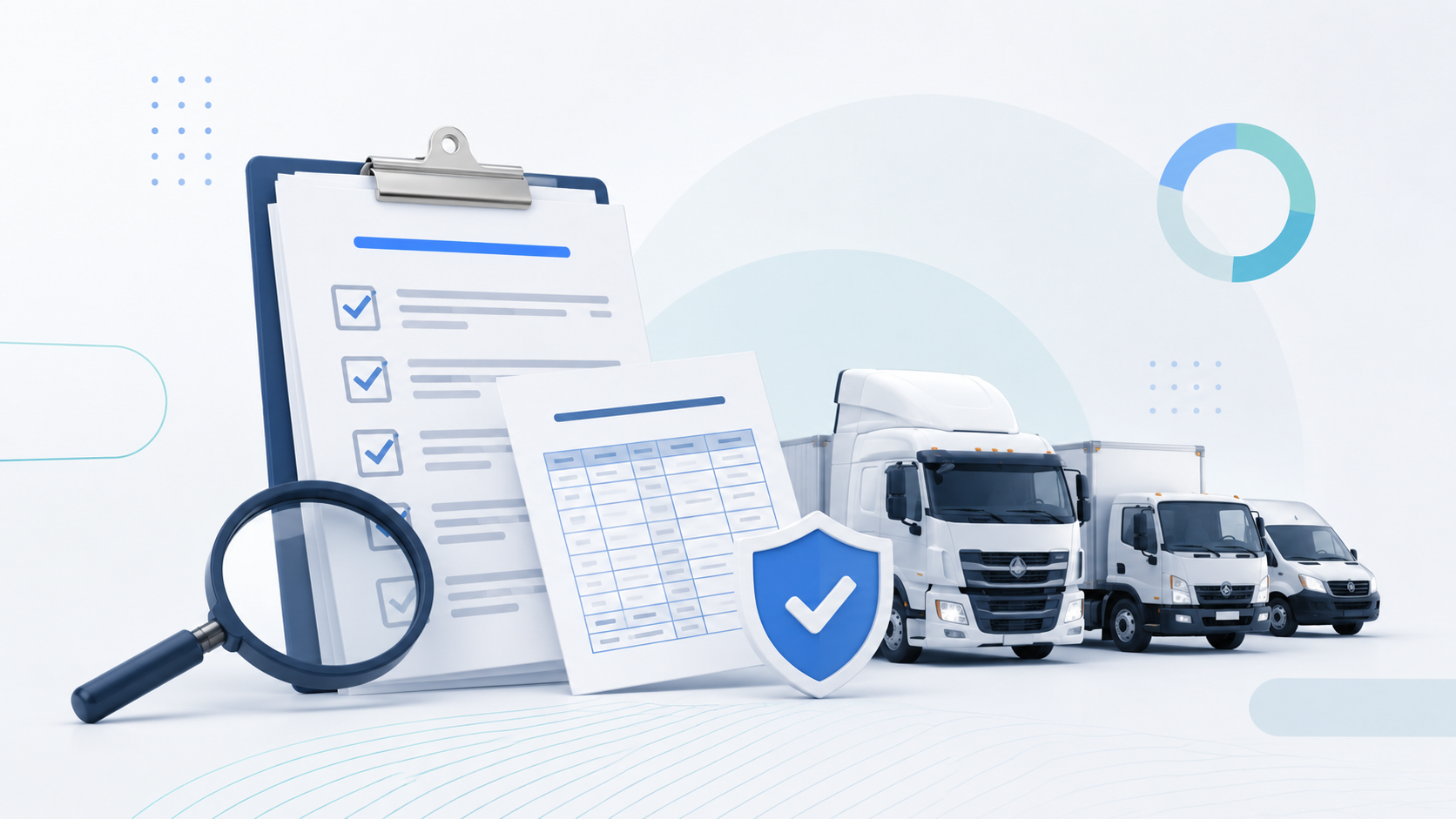
Before deploying any AI tool for commercial insurance work, verify the following:
- Encrypted data pipelines
- Data isolation, with no cross-client data sharing
- SOC 2 Type II certification
- ISO 27001 certification
- A proprietary model with no client data training
AI Works Best When It Is Part of a Repeatable Process, Not a One-Off Experiment
AI used differently by each person on the team produces uneven results and does not scale. The efficiency gains described in this article come from embedding AI into repeatable workflows. They do not come from individual team members using AI tools differently on a case-by-case basis.
Regulatory scrutiny of AI use in commercial insurance is increasing at the state level. As of 2025, 24 states have adopted the NAIC AI Model Bulletin, which requires insurers and brokers to document their AI systems, governance structures, and risk controls. Brokers who document their AI workflows now will have less ground to cover when state regulators ask for it.
For most commercial P&C teams, submission intake or ACORD processing are the natural entry points. The volume is high, the time cost is visible, and the measurement is straightforward. Pick one workflow, measure the time recovered and build from there.